Friday, January 24, 2020

Thursday, January 23, 2020
Where's the Party?
From Reason:
BUT ARE THERE MODELS?
Countries and dependencies without legal political parties.
First Party System: 1792–1824 (Hershey 16-18)
Adam Kokesh, longtime anarcho-libertarian activist who first came to public prominence with Iraq Veterans Against the War in 2007 and was later a big Ron Paul supporter, today filed the paperwork necessary to officially seek the U.S. presidency. He is hoping for the Libertarian Party's presidential nomination.
He also had his RV pulled over twice by Texas police, and was arrested the second time.
BUT ARE THERE MODELS?
Countries and dependencies without legal political parties.
- Bahrain — Political "parties" are banned, but political "societies" are allowed. The media, however, usually refer to these formations as "parties".
- Christmas Island
- Cocos (Keeling) Islands
- Falkland Islands
- Guernsey
- Kuwait — Political "parties" are not not legally recognized, but political blocs are allowed. The media, however, usually refer to these blocs as "parties".
- Federated States of Micronesia
- Norfolk Island
- Oman — Political parties are banned.
- Pakistan — Political parties are banned in the Federally Administered Tribal Areas.
- Palau
- Pitcairn Islands
- Qatar — Political parties are banned.
- Saint Helena, Ascension and Tristan da Cunha
- Saudi Arabia — Political parties are banned.
- Tokelau
- Tuvalu
- United Arab Emirates — Political parties are banned.
- Vatican City Stat
Party competition and the power of incumbency
The line is now drawn so clearly as to show on one side, 1. The fashionable circles of Philadelphia, New York, Boston and Charleston, (natural aristocrats), 2. Merchants trading on British capital, 3. Paper men (all the old tories are found in some one of the three descriptions). On the other side are, 1. Merchants trading on their own capital. 2. Irish merchants. 3. Tradesmen, mechanics, farmers, and every other possible description of our citizens.
Federalists (die off by 1816) v. Democratic-Republican Party (also called "Democratic-Republican" or "Jeffersonian Republican").
Second Party System: 1828–1854 (18-19)
Democrats v. National Republicans, then Whigs
Third Party System: 1854–1890s
Democrats v. Republicans. The Democratic coalition includes pro-business Southern Democrats, traditional Democrats in the North and Catholic immigrants, among others. The Republican coalition consists of businessmen, shop owners, skilled craftsmen, clerks, and professionals.
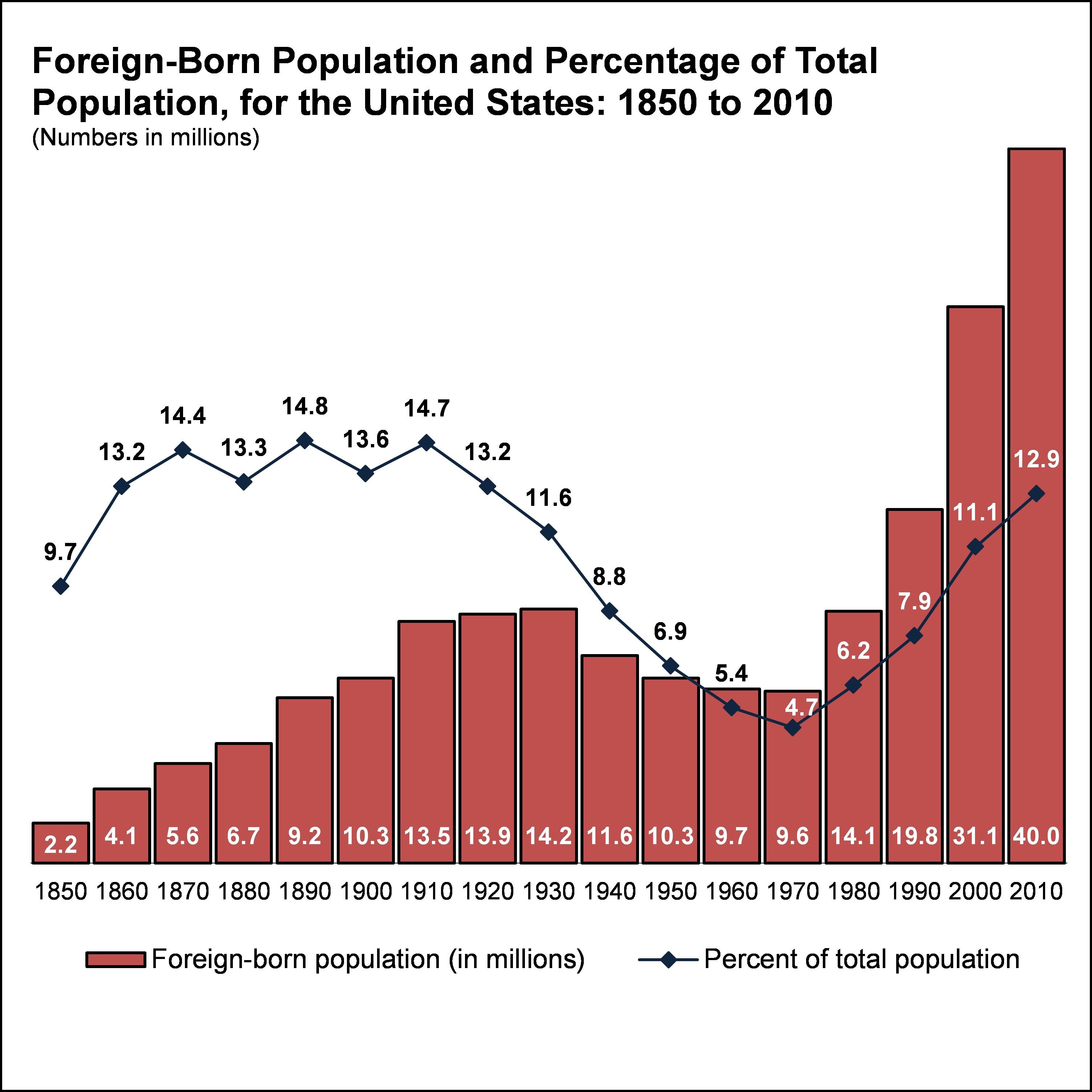
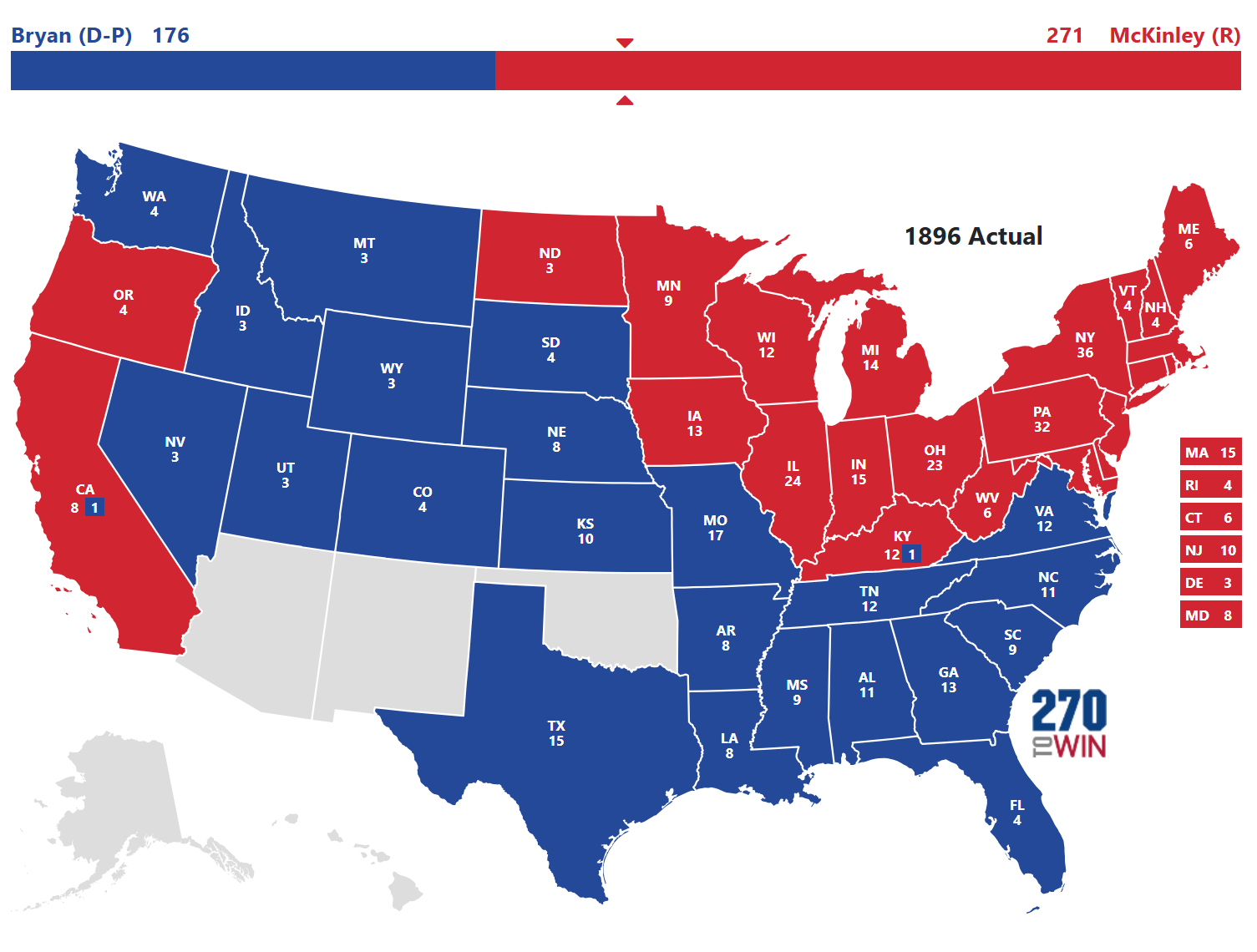
Fourth Party System: 1896–1932
Domestic issues changed to government regulation of business and banking, the tariff, the role of labor unions, child labor, political corruption and reform. racial segregation, women's suffrage, and immigration. The nation shifts from rural to urban, from mostly native-born to immigrant stock.
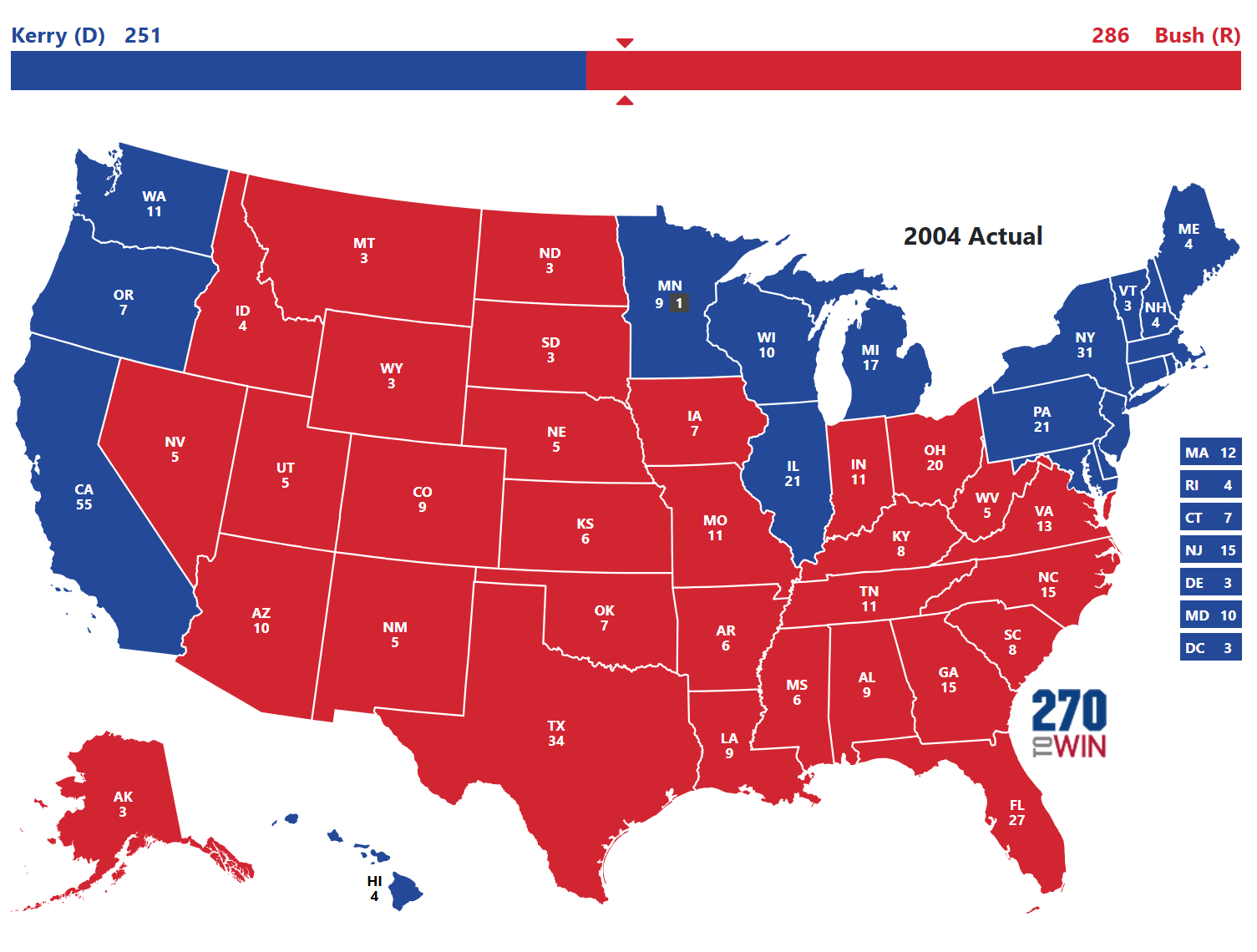
Fifth Party System 1932-1968 (?)
New Deal Coalition. African-Americans, union members, and ethnic and religious minorities, city dwellers, "the Solid South." Republicans have the leftovers.
Afterward?
Second Party System: 1828–1854 (18-19)
Democrats v. National Republicans, then Whigs
Third Party System: 1854–1890s
Democrats v. Republicans. The Democratic coalition includes pro-business Southern Democrats, traditional Democrats in the North and Catholic immigrants, among others. The Republican coalition consists of businessmen, shop owners, skilled craftsmen, clerks, and professionals.
Fourth Party System: 1896–1932
Domestic issues changed to government regulation of business and banking, the tariff, the role of labor unions, child labor, political corruption and reform. racial segregation, women's suffrage, and immigration. The nation shifts from rural to urban, from mostly native-born to immigrant stock.
Fifth Party System 1932-1968 (?)
New Deal Coalition. African-Americans, union members, and ethnic and religious minorities, city dwellers, "the Solid South." Republicans have the leftovers.
Afterward?
Wednesday, January 22, 2020
Understanding POs: "Top progressives, DCCC reach ceasefire over 'blacklist'"
This article helped me understand how various groups within the Democratic party interact and negotiate:
Top progressives, DCCC reach ceasefire over 'blacklist'
Top progressives, DCCC reach ceasefire over 'blacklist'
Tuesday, January 21, 2020
Tuesday, May 1, 2018
California's next governor: These are the people running in the June 5 primary
Check out this article regarding CA's next governor.
Вывод
From last time:
Types of Third-Party Movements
Mueller indicted "the Internet Research Agency"
Examples of their work
Americans served as signal boosters.
Bots
They targeted Michigan and Wisconsin.
We close on a disturbing note:
Types of Third-Party Movements
Reasons for Third Party Bursts
- Major party deterioration and issue responsiveness
- Economic decline
- Unacceptable major party candidates
Hershey (p. 382): "Why should partisanship help citizens who have so many other sources of information about candidates and issues? Perhaps it is because they are exposed to so much information."
In all bodies, those who will lead, must also, in a considerable degree, follow. They must conform their propositions to the taste, talent, and disposition, of those whom they wish to conduct: therefore, if an assembly is viciously or feebly composed in a very great part of it, nothing but such a supreme degree of virtue as very rarely appears in the world, and for that reason cannot enter into calculation, will prevent the men of talent disseminated through it from becoming only the expert instruments of absurd projects!And finally, Russia
Mueller indicted "the Internet Research Agency"
Defendant ORGANIZATION had a strategic goal to sow discord in the U.S. political
system, including the 2016 U.S. presidential election. Defendants posted derogatory information about a number of candidates, and by early to mid-2016, Defendants’ operations included supporting the presidential campaign of then-candidate Donald J. Trump (“Trump Campaign”) and disparaging Hillary Clinton. Defendants made various expenditures to carry out those activities, including buying political advertisements on social media in the names of U.S. persons and entities. Defendants also staged political rallies inside the United States, and while posing as U.S. grassroots entities and U.S. persons, and without revealing their Russian identities and ORGANIZATION affiliation, solicited and compensated real U.S. persons to promote or disparage candidates. Some Defendants, posing as U.S. persons and without revealing their Russian association, communicated with unwitting individuals associated with the Trump Campaign and
with other political activists to seek to coordinate political activities.
Examples of their work
Americans served as signal boosters.
Bots
They targeted Michigan and Wisconsin.
We close on a disturbing note:
Subscribe to:
Posts (Atom)