Thursday, February 6, 2020

The 1960s and Party Reform in the 1970s

Iowa -- Carter in 1976

The 1960s in numbers.

Image result for vietnam casualties by year"

In 1965, LBJ got Congress to pass the Voting Rights Act.  The effect was dramatic.  In 1972, Rev. Andrew Young (D-Georgia) became the first African-American representative from the Deep South since Reconstruction.  He later said:
“It used to be Southern politics was just ‘n-----’ politics, who could ‘outn-----’ the other—then you registered 10 to 15 percent in the community and folks would start saying ‘Nigra,’ and then you get 35 to 40 percent registered and it’s amazing how quick they learned how to say ‘Nee-grow,’ and now that we’ve got 50, 60, 70 percent of the black votes registered in the South, everybody’s proud to be associated with their black brothers and sisters.”
By 1966, howver, the civil rights consensus was already fraying:

Views About Dr. Martin Luther King Jr., on a -5 to +5 Scale, August 2011 and in the 1960s

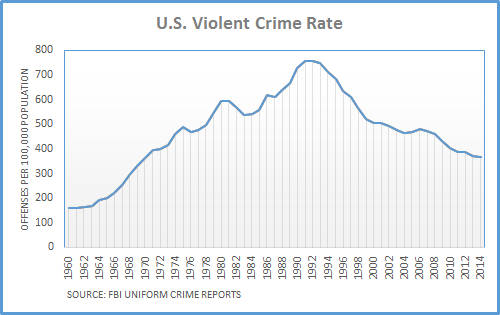
Violent Crime Rate Chart

1968 Convention


McGovern-Fraser

Daley excluded in 1972 (See Rosenfeld 129)

Party regulars did not have a deep commitment to the old system (Rosenfeld 143). "Opponents of reform could not articulate a plausible argument for existing arrangements..." (144)

From Choosing Presidential Candidates


Tuesday, February 4, 2020

Party History, the Cold War, and the Sixties

Iowa Results

Partisanship and Bipartisanship
Taft v. Eisenhower


National Review and the conservative movement (Rosenfeld 76-86)

The John Birch Society and the fringe

1960

"The Treaty of Fifth Avenue"

Nixon and JFK:  domestic policy as foreign policy


Soviets and Civil Rights  -- the Kennedy Administration sees segregation as a front in the Cold war

The Sharon Statement v. The Port Huron Statement

Goldwater and a Claremont connection:


The politics of congressional consensus:  the 1964 Civil Rights Act

But LBJ understood that victory is fleeting:
When you win big you can have anything you want for a time. You come home with that big landslide and there isn’t a one of them [in Congress] who’ll stand in your way. No, they’ll be glad to be aboard and to have their photograph taken with you and be part of all that victory. They’ll come along and they’ll give you almost everything you want for a while and then they’ll turn on you. They always do. They’ll lay in waiting, waiting for you to make a slip and you will. They’ll give you almost everything and then they’ll make you pay for it. They’ll get tired of all those columnists writing how smart you are and how weak they are and then the pendulum will swing back. 
Dramatized here (1:30):


Thursday, January 30, 2020

National Party History

National Committees

DNC and RNC

Hill Committees

DCCC and NRCC
DSCC and NRSC
=========================================

PRELUDE:  WILLKIE AND ROOSEVELT.  Four years earlier, FDR -- on tape!! -- talked about publicizing Willkie's extramarital activities.
`
American Political Science Association, "Toward a More Responsible Two-party System. A Report of the Committee on Political Parties" (supplement to American Political Science Review 44, 3 (September, 1950)), http://www.uvm.edu/~dguber/POLS125/articles/apsa.pdf.


1948

ElectoralCollege1948.svg


1952

"No development proved more galvanizing to the emergence of that activism than Adlai Stevenson's first campaign for president" (Rosenfeld 28).  Start around 11:00;


Partisanship and Bipartisanship

First Writing Assignment, Spring 2020

Pick one:
  • Compare and contrast a Democratic or Republican platform from 1948-1964 with the same party's 2016 platform.  What do the similarities and differences tell you about how the national party has changed?  (Platform texts here.)
  • Pick any national party chair in the postwar era.  (GOP list, Democratic list).  What did this leader try to do?  How did she or he fare?  In your answer, keep in mind the resources and constraints facing this leader.  Also remember that out-party chairs have far more flexibility than in-party chairs.
  • For people with an interest in foreign policy:  did the 1952 Taft-Eisenhower split on foreign policy foreshadow future Republican divisions?  How did Robert A. Taft both resemble and differ from supporters of the current administration?
  • The conclusion of the Rosenfeld book is brief.  Drawing on what we have learned since 2016, write an addendum.  That is, have we witnessed a continuation of the trends that the book describes?  Or has polarization taken a new form?  Explain.
Essays should reflect an understanding of class readings and discussions. Many resources, including CQ Weekly and Politics in America, are at Honnold Library/Databases/CQ Library. You should check other sources as well. See:

PLEASE EMAIL ME IF ANY LINKS ARE BROKEN!


The specifications:
  • Essays should be typed (12-point), double-spaced, and no more than four pages long. I will not read past the fourth page. Please submit essays as Word documents, not pdfs.
  • Cite your sources. Please use endnotes in the format of Chicago Manual of Style. Endnotes do not count against the page limit. Please do not use footnotes, which take up too much page space. 
  • Watch your spelling, grammar, diction, and punctuation. Errors will count against you. Return essays to the Sakai dropbox for this class by 11: 59 PM, Friday, February 14. Papers will drop one gradepoint for one day’s lateness, a full letter grade after that.

How to Caucus

As explained by the Yang Gang:

Friday, January 24, 2020

Presidential Primary Resources

A very useful list from Professor Brian Arbour (Pomona `95):


Presidential Primary Resources

Primary/Caucus/Convention Schedule

Who’s Running?

Campaign Finance

Endorsements;

Amount of Media Coverage

Polls and Projections
National

Iowa

New Hampshire

Nevada

South Carolina 

Projections

Betting Averages:

Delegate Counts

How Delegate Counts Work

General Election

Trump Job Approval

Primary/Caucus/Convention Glossary
Crystal Ball:  http://centerforpolitics.org/crystalball/articles/a-glossary-of-national-convention-delegate-allocation/