Monday, February 28, 2022

Campaign Finance I

For Wednesday, read Schatzinger and the Vogel-Goldmacher article that I emailed you this morning.


Federal spending in 2020 cycle: $14.4 billion

How it works (DCCC at 14:00)

Milestones
  • FECA 1971 and 1974
  • Buckley v. Valeo and the part of the decision that allowed for Bloomberg (Hershey 274):
    • 2. Limitation on Expenditures by Candidates from Personal or Family Resources. The Act also sets limits on expenditures by a candidate "from his personal funds, or the personal funds of his immediate family, in connection with his campaigns during any calendar year." ...  The primary governmental interest served by the Act -- the prevention of actual and apparent corruption of the political process -- does not support the limitation on the candidate's expenditure of his own personal funds. As the Court of Appeals concluded:" Manifestly, the core problem of avoiding undisclosed and undue influence on candidates from outside interests has lesser application when the monies involved come from the candidate himself or from his immediate family."171 U.S.App.D.C. at 206, 519 F.2d at 855. Indeed, the use of personal funds reduces the candidate's dependence on outside contributions, and thereby counteracts the coercive pressures and attendant risks of abuse to which the Act's contribution limitations are directed. [Footnote 59] The ancillary interest in equalizing the relative financial resources of candidates competing for elective office, therefore, provides the sole relevant rationale for § 608(a)'s expenditure ceiling. That interest is clearly not sufficient to justify the provision's infringement of fundamental First Amendment rights. First, the limitation may fail to promote financial equality among candidates. A candidate who spends less of his personal resources on his campaign may nonetheless outspend his rival as a result of more successful fundraising efforts. Indeed, a candidate's personal wealth may impede his efforts to persuade others that he needs their financial contributions or volunteer efforts to conduct an effective campaign. Second, and more fundamentally, the First Amendment simply cannot tolerate § 608(a)'s restriction upon the freedom of a candidate to speak without legislative limit on behalf of his own candidacy. We therefore hold that § 608(a)'s restriction on a candidate's personal expenditures is unconstitutional.
  • "Magic Words," Footnote 52 and Soft Money (Hershey 275-276)
  • Colorado I and II:  party coordinated and independent expenditures
  • BCRA and McConnell v. FEC: "We are under no illusion that BCRA will be the last congressional statement on the matter. Money, like water, will always find an outlet."
  • Bundling -- at the state level
  • Citizens United and SpeechNow  -- also big impact on state and local elections 
  • McCutcheon v. FEC and "victory committees," joint fundraising committees (or JFCs)


Trump got nearly $5 billion in free media:

FEC limits and special party rules

Outside spending: an overview

Following the Money

Sunday, February 27, 2022

Second Assignment, Spring 2022

 Pick one:

Essays should reflect an understanding of class readings and discussions. Many resources, including CQ Weekly and Politics in America are at Honnold Library/Databases/CQ Library. You should check other sources as well. See:
The specifications:
  • Essays should be typed (12-point), double-spaced, and no more than four pages long. I will not read past the fourth page. Please submit papers as Word documents, not pdfs.
  • Cite your sources. Please use endnotes in the format of Chicago Manual of Style. Endnotes do not count against the page limit. Please do not use footnotes, which take up too much page space. If you have proper endnotes, you do not need to include a bibliography. 
  • Watch your spelling, grammar, diction, and punctuation. Errors will count against you. Return essays to the Sakai dropbox for this class by 11:59 PM, Friday, March 11. Papers will drop one gradepoint for one day’s lateness, a full letter grade after that.

Wednesday, February 23, 2022

Party Organization II

For Monday, read Hershey, ch. 12: Wed. readings will be on Sakai.

Questions on the assignment?

National Committees


DNC and RNC

Hill Committees

DCCC and NRCC
DSCC and NRSC

1990: NRCC v. RNC

The 527 Groups 


Incentives for Activism
  • Material: traditional party organization
  • Solidary: social connections
  • Purposive:  issues and ideologies
Voter turnout and duty


Voter demographics  


Young adults

Prags v. Purists:  Polarization means activism


At the same time, their priorities have begun to shift. Dr. Burge pointed to an analysis of the 2016 Cooperative Congressional Election Study he’d conducted, in which white evangelicals ranked political issues by importance. Same-sex marriage — once a point of bitter contention between white evangelicals and some of their moderate Republican allies — came in last, after jobs, crime, gun control and a variety of other matters. Abortion, too, came in surprisingly low on white evangelicals’ ranking of priorities — underneath, for example, immigration. According to Mr. Smith, Pew found this year that “81 percent of white evangelical Protestants said that the economy would be a very important issue in making their decision about who to vote for in the 2020 presidential election, while 61 percent said the same about abortion.” In 2016, he added, a similar finding also held.

“I think what happened was, over time, white evangelical orthodoxy on politics sort of just melded into Republican orthodoxy, and there’s no difference anymore,” Dr. Burge told me. “We used to always believe that religion was the first cause and then politics was downstream of religion,” but newer studies suggest that “those two lenses have switched places now and that partisanship is the first cause and now religion is downstream of partisanship.”

Wednesday, February 16, 2022

Parties to the Present

For Monday:  Hershey, ch. 3, 4.

Recap:  things are about to end the four-party system.

Party organizations as service providers: more next week.

DLC (275) and Clintonism 


DLC fades with the disappearance of conservative Southern Democrats. Democratic share of Southern (CQ def) House seats

87th Congress (1961-62).....93.4%
103d Congress (1993-94)....61.6%
104th Congress (1994-96)...48.8% -- Gingrich
115th Congress (2017-217)..28.0%


Meanwhile, back at the GOP...


 Reflect on the Rosenfeld and responsible parties:  Newt on Governing Team Day, Congressional Record, September 8, 1980, 24683
A wide range of political scientists including James McGregor Burns, Frederick Sonntag, Manning Dauer, Jack Saloma and others, have urged steps to strengthen the party system. There is a growing consensus that a weak party system leads to irresponsibility, to single issue politics and to domination by special interests. Furthermore, there is a growing belief that personality politics focused on individual candidates heightens irresponsibility and the lack of accountability
Rep. Dan Lungren (next page):
Mr. Speaker, I think the gentleman has pointed out to us the significance that we hope to establish with respect to our activities on September 15. Whatever the failings that the parliamentary systems of European democracies may have, they are superior to our more loosely knit representative system in one respect: That respect the gentleman has referred to as accountability.

When a British worker goes to cast his vote for his representatives in the House of Commons, there is little doubt in his mind as to which party to hold accountable for the current state of affairs in his country. But here in our country, where legislators are responsible for myriad constituent services; where regional, State, and ethnic identities are strong; where members of the legislative branch are not structurally tied to the Chief Executive of their own party, the accountability for the current state of affairs tends to be blurred in the minds of the citizenry.

Iron law of emulation: "From 1995 to 2006, Republicans in control of Congress took the centralizing the discipline-bolstering tactics pioneered by Democrats and dramatically expanded their use" (Rosenfeld 271).  More when we get to party in government.

Hollowness of parties (284): Weak parties and strong partisanship


Monday, February 14, 2022

Divided Government and Beyond

 For Wednesday, read Rosenfeld, ch. 8 and conclusion.

The "Welfare Shift"


Before the 1970s, tax cuts were not central to the GOP message.  In fact, Republicans opposed JFK's tax but proposal!

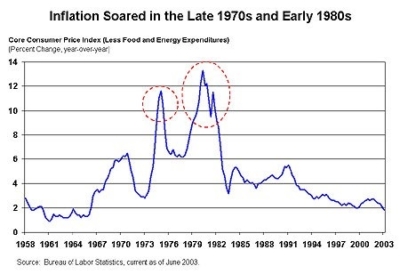
Oil shocks (1973 OPEC and 1979 Iran) begat inflation, which begat rising nominal property values and bracket creep, which begat Prop 13 (1978) and Kemp-Roth


"Of a sudden, the GOP has become a party of ideas."  -- Daniel Patrick Moynihan 1981


By the end of the decade, liberal calls abounded for the explicit emulation of conservative organizational innovations from the 1960s and 1970s" (Rosenfeld 248)

Democratic Social Organizing Committee (Rosenfeld 230-233) begets Democratic Socialists of America

The 1980s and the Legacy of the Reverends
The 1988 election seemed to confirm the four-party system.
But things are about to end the four-party system.

Wednesday, February 9, 2022

Vanguards and the Iron Law of Emulation

For Monday, read Rosenfeld ch. 7 and Drutman ch. 4.

The Great Reordering

New Left and the 1972 D platform: "We must restructure the social, political and economic relationships throughout the entire society in order to ensure the equitable distribution of wealth and power."

The 1972 election:  president by county


Incomplete Reordering : The 1972 election in the House

1972 House Elections in the United States.png

NIXON DID NOT REALLY GIVE A [EXPLETIVE DELETED] ABOUT CONGRESS

Carter and the New South


The third-party flirtation (Rosenfeld 188-190).

In California, the confusing legacy of the American Independent Party.

Present at the creation (Rosenfeld 190-191). Paul Weyrich, who founded Heritage and the Free Congress Foundation, spoke of the moment of inspiration in 1969, when he was a staffer for Senator Gordon Allott (R-CO).

Start at 24:20


Drives home two key points:

Other Publications and Groups
Thanks to primaries, Reagan comes very close to defeating Ford for the 1976 nomination.  The delegate count:
  • Gerald Ford........... 1,187 52.57%
  • Ronald Reagan...... 1,070 47.39%

Not photoshopped:  outgoing vp Nelson Rockefeller expresses his view of the New Right.


Carter years 

(Currently around 7 percent)


"Of a sudden, the GOP has become a party of ideas."  -- Daniel Patrick Moynihan 1981

Looking ahead to next week: "By the end of the decade, liberal calls abounded for the explicit emulation of conservative organizational innovations from the 1960s and 1970s" (Rosenfeld 248)